Design Ops
Not a project. The things I keep making on every project, because a team that has to rediscover how it works every quarter never gets to the design.
Why this is here
Every case study on this site has a moment where the work only happened because something operational already existed — a file structure, a template, a roadmap somebody had drawn. Those things are usually invisible, and they are a lot of what I actually do.
This page is the methods, docs and resources I have built to help teams succeed, collected in one place.
Saddle Pass: running the company like a product
In October 2026 Saddle Pass went from me and a couple of contractors to a distributed team: a new product designer, an engineer in another timezone, a brand designer, a design lead, and a co-founder who is our expert on the equestrian world. Almost nobody is full time, and nobody is in the same room. Everything in this section is how that team works without me having to be in every conversation.
Onboarding: one board, ten steps, two weeks
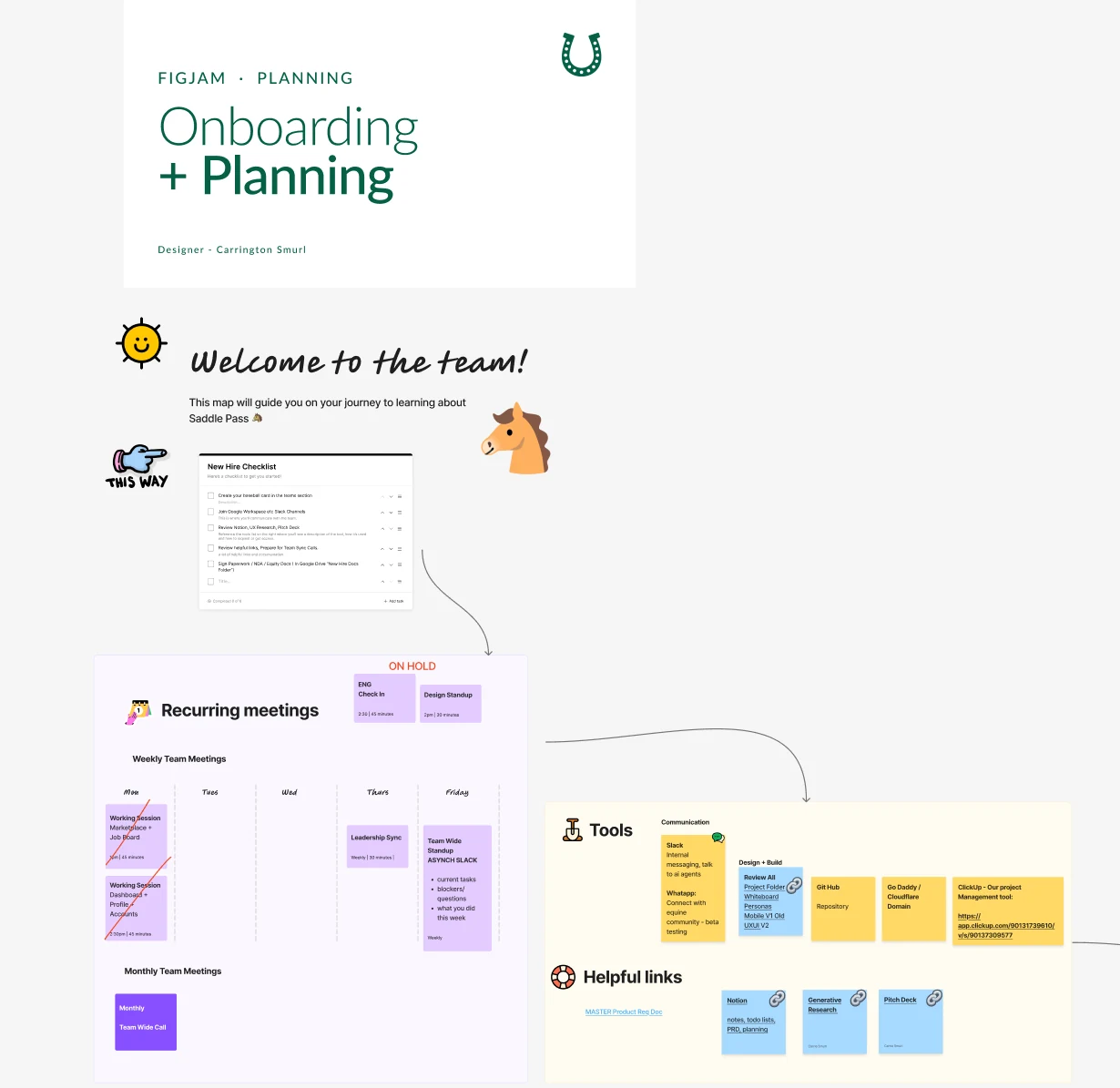
The board comes with a pinned Getting Started message in Slack: ten steps for the first two weeks, in order. Read the board. Fill in your baseball card. Book one-on-ones with your manager, the leadership team and the peers you will work with, and with our co-founder for anything about horses. Get into the three Figma files that matter: the whiteboard with the personas and journey maps, the ground-truth screens, and the design system. Read the design brief and the journey maps. Turn on Figma notifications, because that is where review happens. Put anything confusing in the Parking Lot. Sign the NDA, then the contract, and do not wait for the contract to start learning.
The test of onboarding is the new person’s first week, not the document. Our new product designer’s first weekly check-in read like the list done in order: an audit of the existing screens, the brief and the journeys, a recurring design sync, one-on-ones booked with the co-founder and the engineer. Then one thing that was not on the list: a request for a separate file for explorations, so the main file stays for finished designs. That is the question people ask once they understand how the files are meant to work.
An async Friday check-in instead of a standup meeting
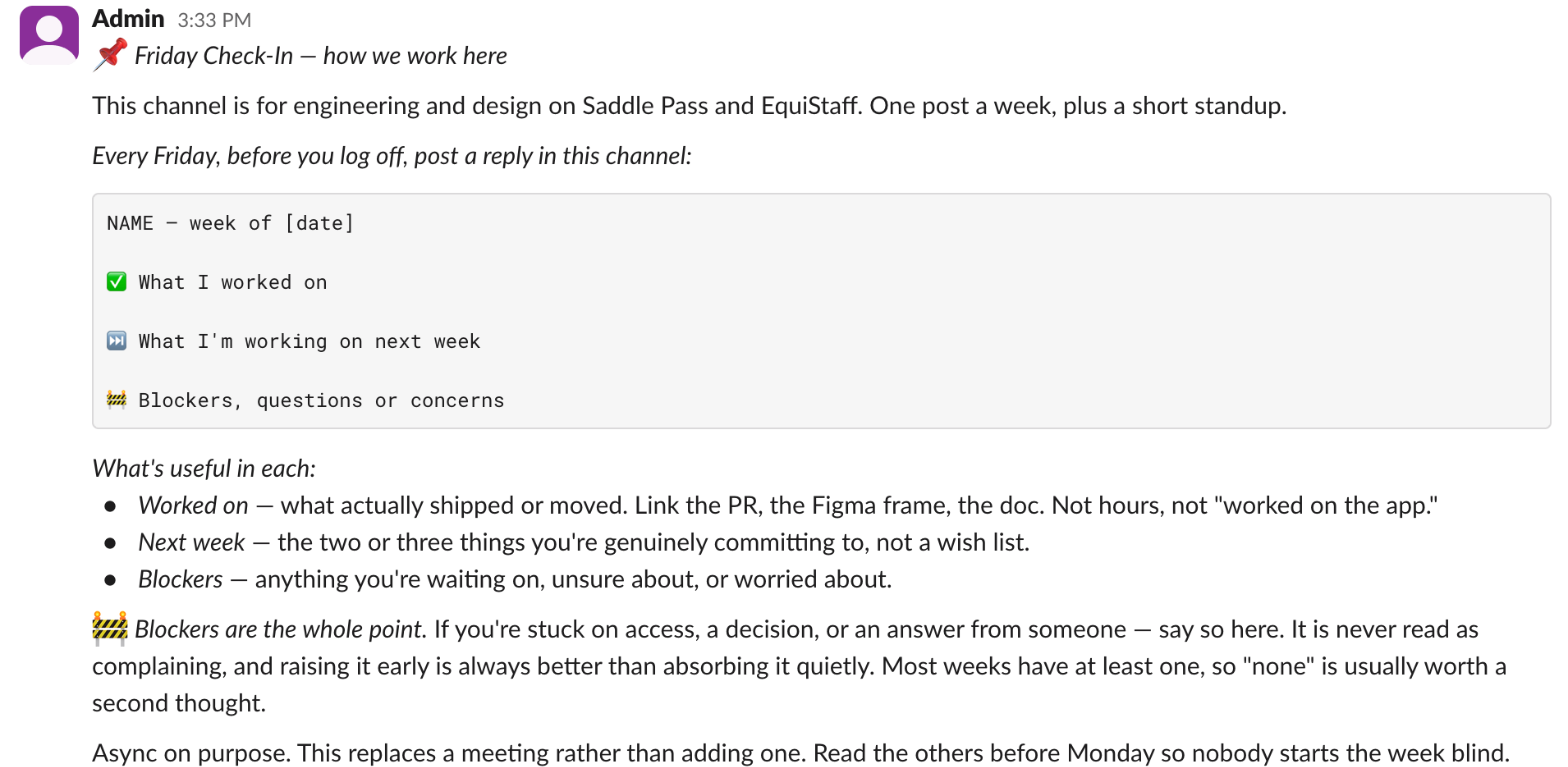
A daily standup across timezones and part-time schedules would have cost more than it returned. So it is one written post a week, and every prompt is designed against the way check-ins usually go wrong:
- Worked on means what shipped or moved, with a link to the pull request, the Figma frame or the doc. Not hours, and not “worked on the app.”
- Next week is the two or three things you are actually committing to, not a wish list.
- Blockers are the whole point. Most weeks have at least one, so “none” is worth a second thought. Raising a blocker early is never read as complaining.
From late October on, the designer and the engineer posted every week, in the template. My own check-in is drafted by an agent from the week’s Slack activity and meeting notes, then edited and approved by me before it posts. That is the same approval gate as in my agents case study, used to run a team instead of a product.
Retros that start with hopes and fears
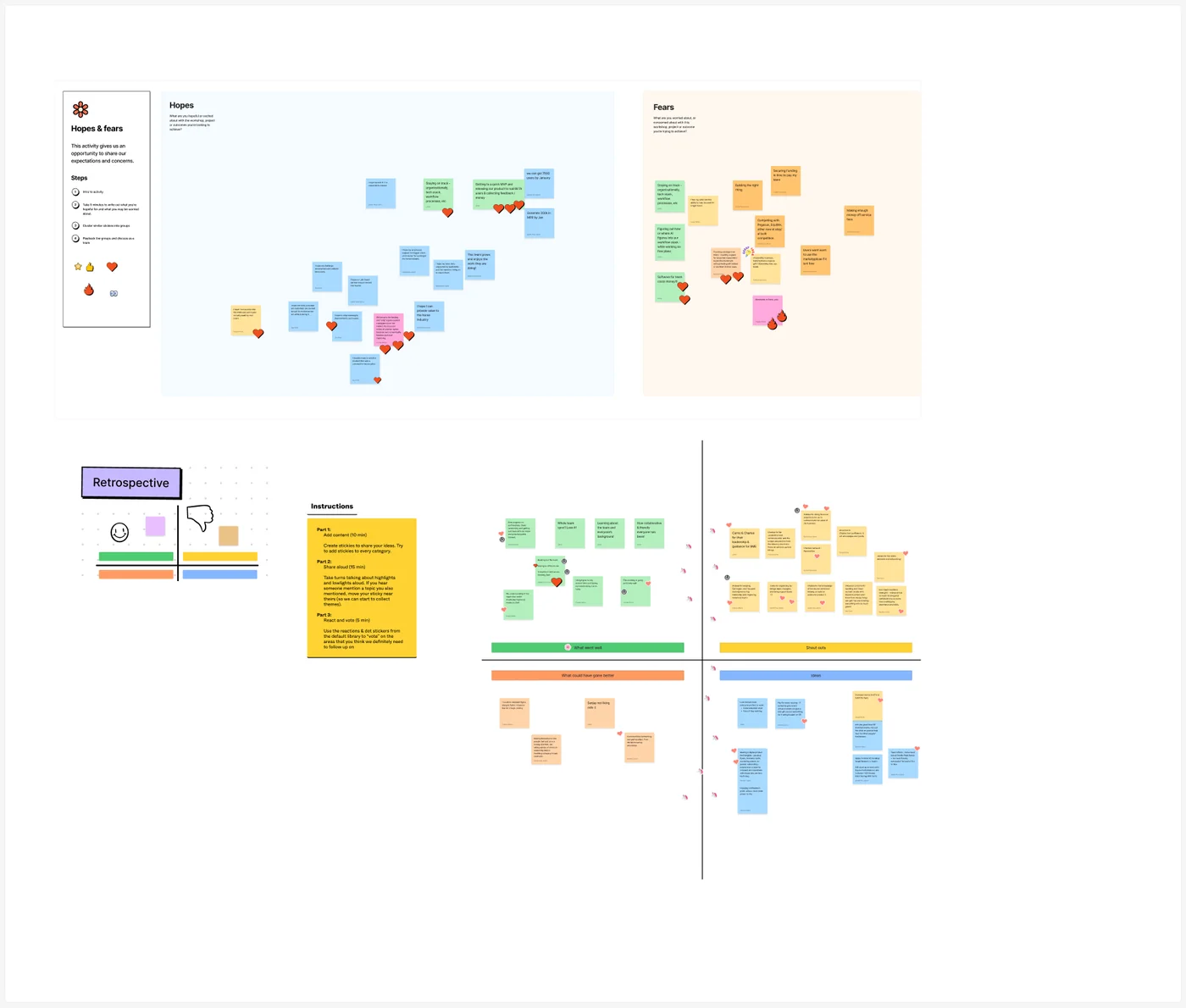
A new team’s fears are where the risks are, so the retro opens with them before anyone talks about the quarter. Ours named the things a founder worries about at 2am: building the wrong thing, running out of money, competitors, the cost of software, and losing track of process. Seeing those written by the team, not by me, is how I know what to fix first. The shout-outs quadrant matters too: on a part-time team, being seen is a large part of why people stay. I ran it again for Q4.
One roadmap with every team on it

How design gets to engineering
The Figma files run as a pipeline, not a pile: work moves from Working to Review-Ready to Dev-Ready, and engineering builds from Dev-Ready. Approval is a single, explicit signal: a 🔨 in the Figma comments, from me. No hammer, no build. Then the design system’s tokens live in the code repository, with tests that fail the build when a codebase drifts from them. Each step replaces a conversation that used to happen every sprint.
Before Saddle Pass: the templates I built at Intapp
Onboarding a designer in a day instead of a month
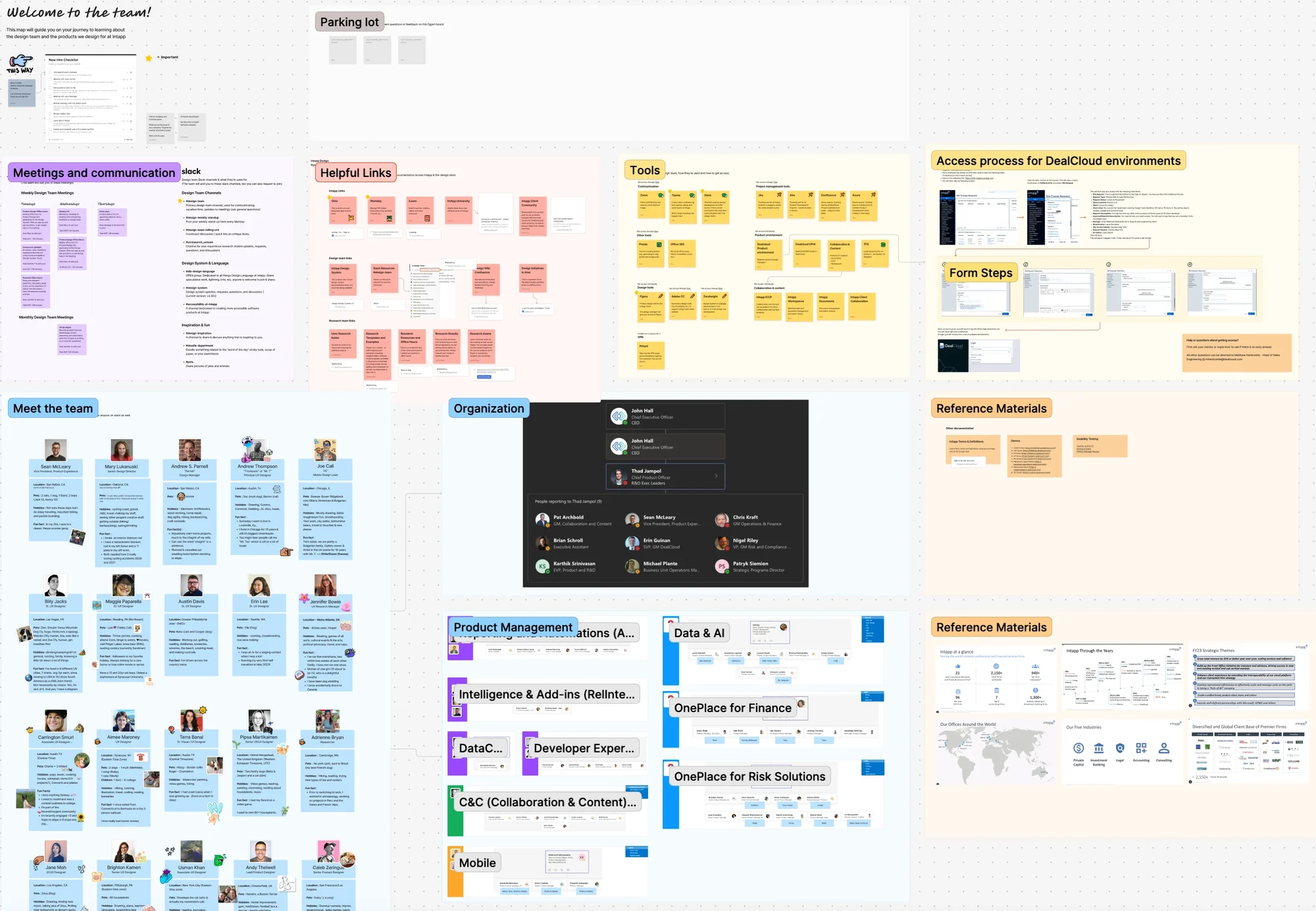
Onboarding is usually delivered as a conversation, which means it is delivered differently to every person and remembered by none of them. A board costs one afternoon, works while you are in a meeting, and gets better every time someone new finds the gap in it.
A persona template, not a persona
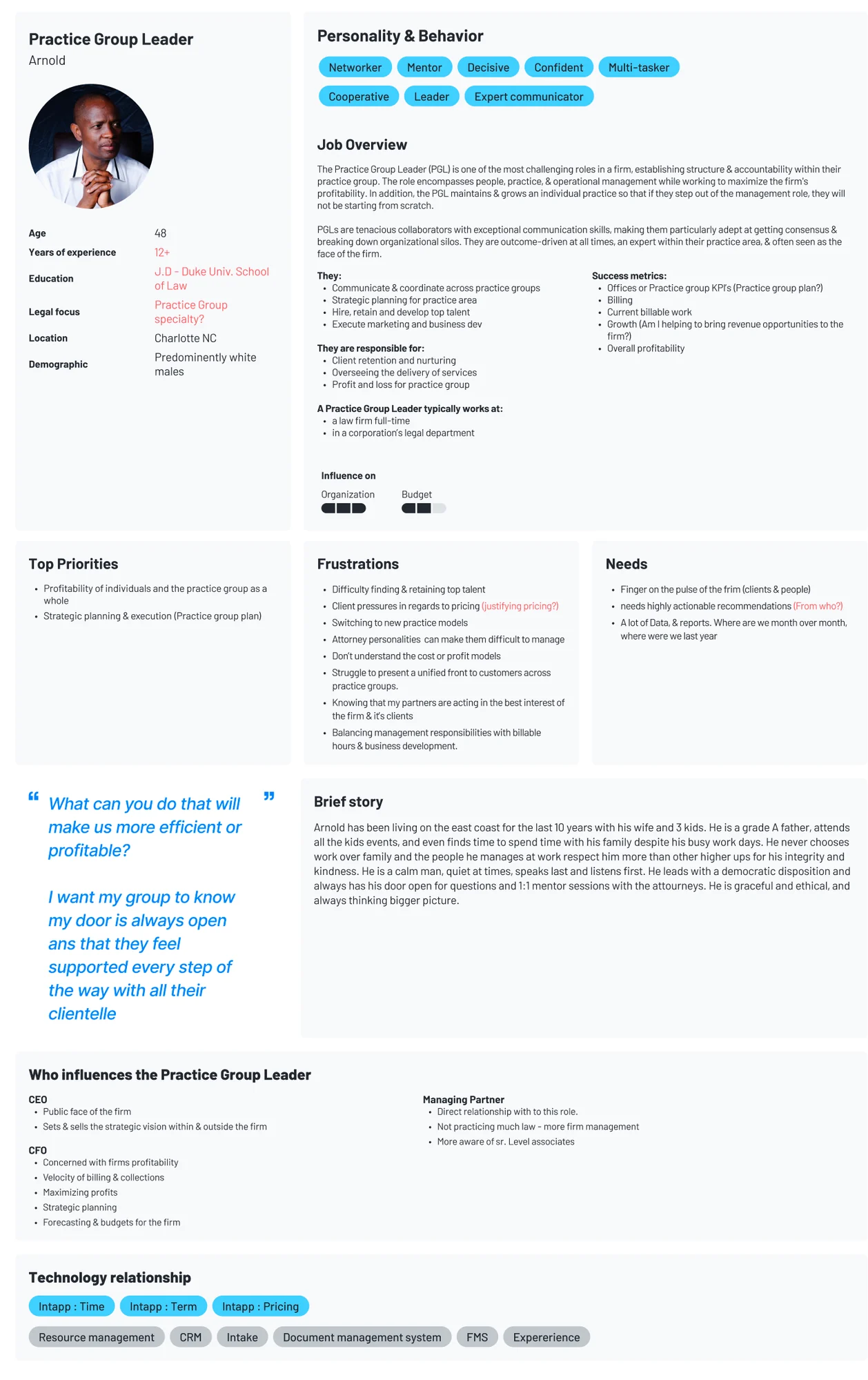
The value of a template is not speed. It is that the next researcher cannot quietly omit the uncomfortable section — the frustrations list, or the question of who this person actually answers to — because the empty box is visible to everyone.
Roadmaps that include the research
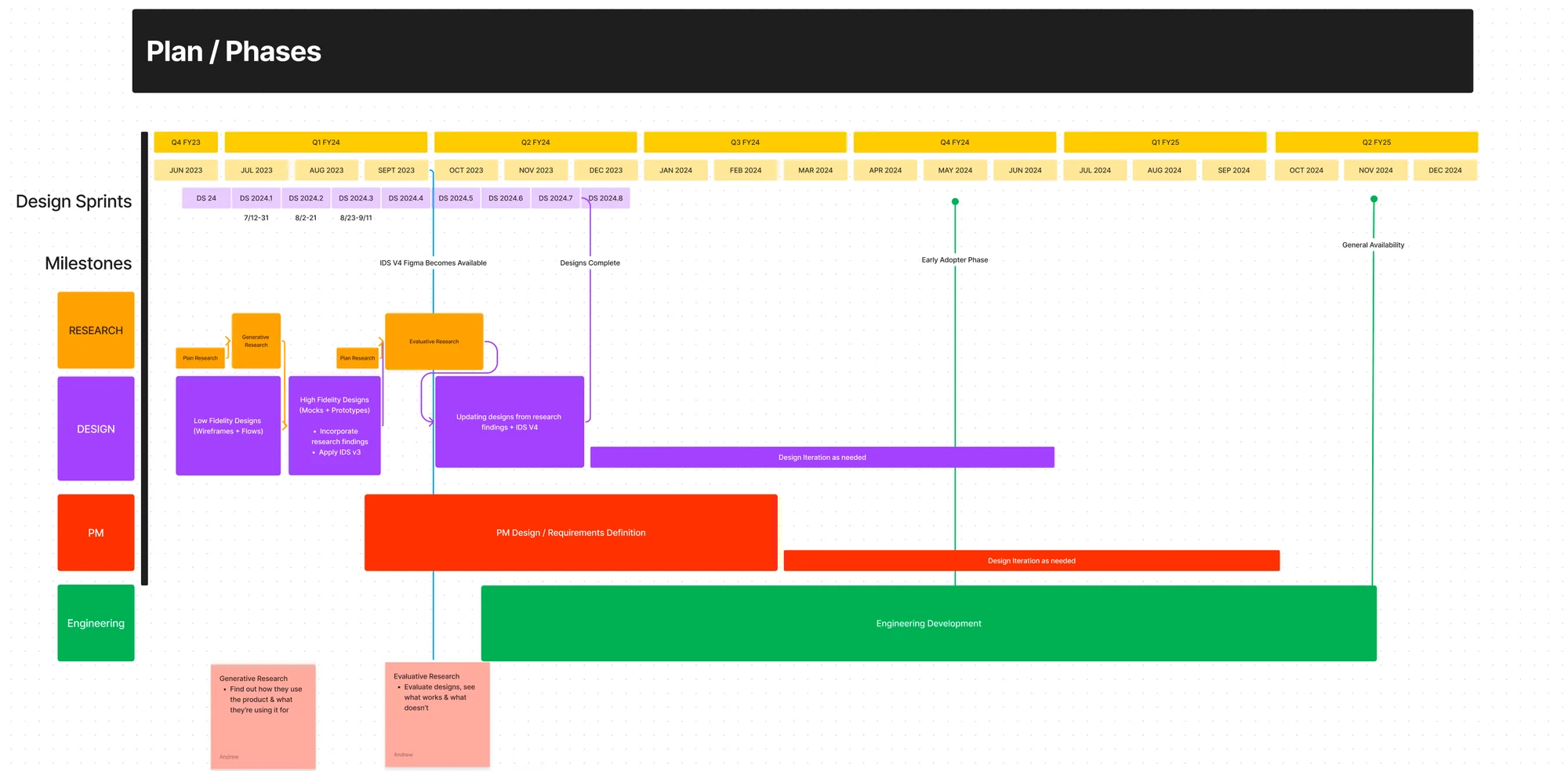
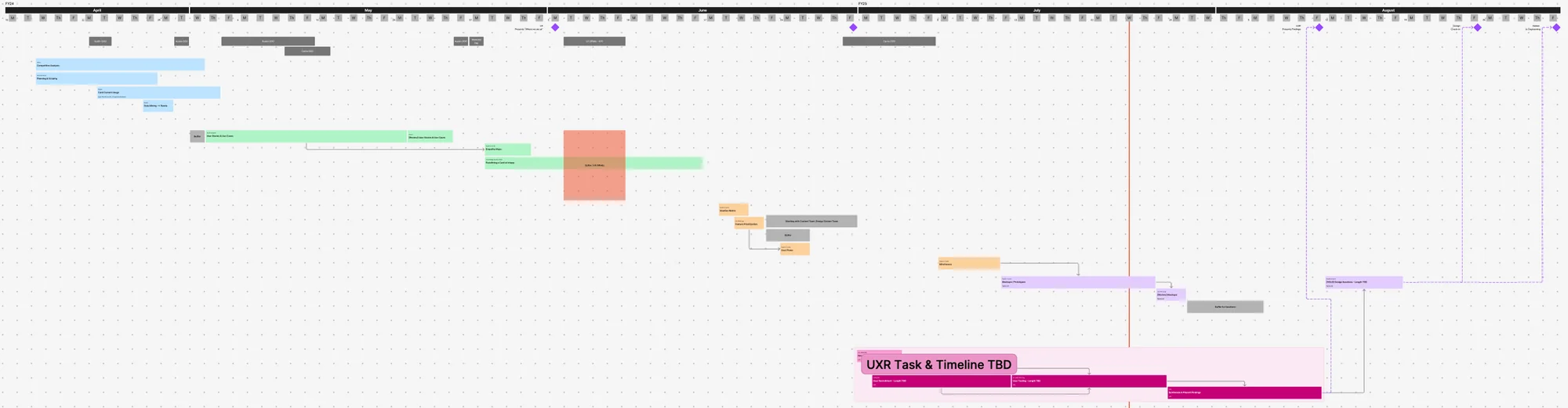
What I would tell you in an interview
Design ops is the part of the job I get asked about least and rely on most. The pattern is always the same: something the team keeps re-deciding gets made into an artifact once, and then stops costing anything.
At Intapp that meant boards and templates for one design team. At Saddle Pass it means the whole company: how people join, how they report, how we look back, and how design reaches engineering. It is the same instinct as the token tests and the pattern flow on Adaptive Cards — find the decision that keeps getting remade, and move it out of people’s heads. That is most of what I mean when I call myself a systems thinker, and it is why I can run a design team without being in every conversation.